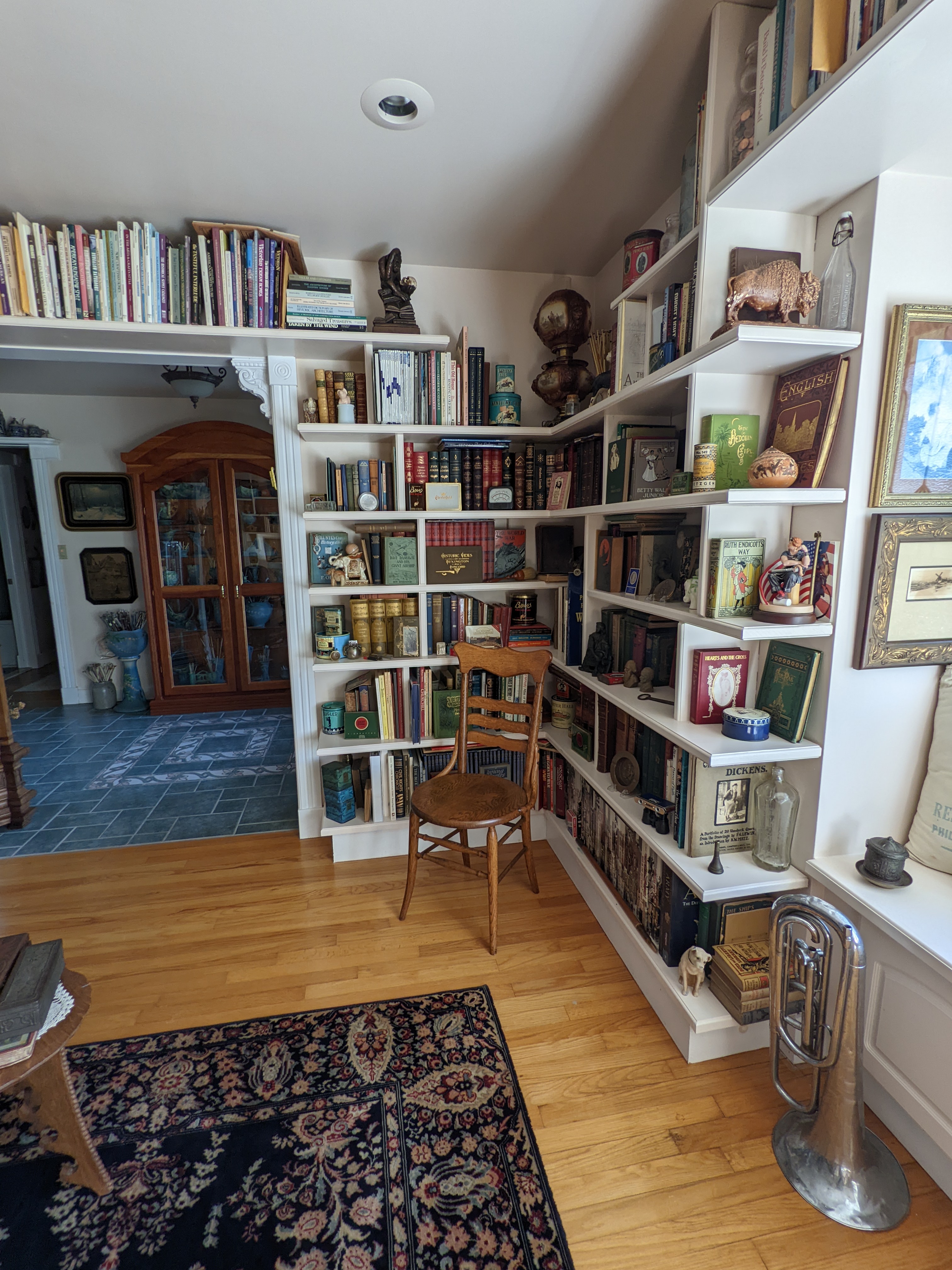
Estate Sales Aren't Just for Antique Collectors Anymore
Estate Sales Aren't Just for Antique Collectors Anymore
There is still a stereotype about who shops estate sales.
Older collectors. Antique dealers. Resellers looking for something valuable tucked away in the basement.
They're still there.
But they're no longer the only people waiting outside when we open the doors.
More and more, we're seeing younger shoppers looking for something completely different: a better way to furnish their homes.
They're looking for solid wood furniture instead of something they'll assemble themselves. Vintage lamps instead of the same one everyone else ordered online. Original artwork, glassware, linens, barware, kitchen pieces and décor that actually have some personality.
And sometimes, they're looking for the exact things families are convinced nobody wants anymore.
Grandma's House Is Having a Moment
Here's the funny thing about working in estate sales long enough:
Everything comes back around.
The floral linens.
Brass.
Colored glass.
Needlepoint.
Old paintings.
Chrome.
Wood furniture.
Quilts.
Vintage Christmas.
The slightly weird lamp everyone in the family has hated since 1997.
There is almost always someone looking for it.
And right now, younger buyers aren't necessarily shopping estate sales because they've suddenly become antique collectors.
They're shopping because they want homes that don't look like everyone else's.
A generation raised with access to identical furniture, identical décor and an endless scroll of identical interiors is discovering something estate sales have always offered:
Things you can't just order again.
Sometimes Vintage Just Makes More Sense
There's another reason younger shoppers are showing up: price.
Furnishing a first apartment or home is expensive.
A new solid-wood dresser can cost considerably more than someone expected to spend. Meanwhile, an older, well-made piece may already have survived several decades—and can sometimes be purchased secondhand for less.
That changes the equation.
Suddenly an estate sale isn't simply somewhere you go looking for antiques.
It's somewhere you can find a dining table.
A desk for your apartment.
Real glassware.
A mirror.
A set of patio furniture.
Cookware.
A wool rug.
Artwork for the wall.
And maybe something completely unnecessary that you fall in love with anyway.
That's the fun part.
What Families Think Is Outdated May Be Exactly What Buyers Want
This is something I wish more families understood before they begin cleaning out a home.
Your personal taste isn't necessarily the market.
Maybe you've looked at your mother's brass lamps for thirty years and can't imagine anyone wanting them.
Someone does.
Maybe nobody in the family wants the china.
That doesn't automatically mean nobody else does.
Maybe the furniture feels dated because you remember when it was originally purchased.
To a 27-year-old seeing it for the first time?
It may be vintage.
That's why we don't evaluate a house based solely on what the family thinks is desirable.
We look at who might buy it.
And those buyers can be completely different depending on what's inside the home.
That's Also Why Presentation Matters
Putting a piece of furniture in a dark corner and sticking a price tag on it isn't necessarily enough anymore.
How something is photographed, described, staged and marketed affects who sees it.
A younger shopper might not search for “antique furniture.”
But they might absolutely be looking for:
mid-century modern furniture
vintage solid wood dresser
grandmillennial décor
vintage barware
cottagecore
Hollywood Regency
postmodern
vintage Christmas
Same secondary market.
Completely different door into it.
That's why our job isn't only pricing what's inside a home.
It's understanding what it is, who might want it, and how to put it in front of them.
The Estate Sale Has Changed
Estate sales used to have a very specific reputation.
Today, the crowd can include collectors and dealers standing next to first-time homeowners, interior designers, vintage lovers, resellers, twenty-somethings furnishing apartments, and people who simply want something better than what they can buy new for the same money.
And I think that's a very good thing.
Because ultimately, an estate sale does something incredibly simple:
It moves things from a home that no longer needs them into the hands of someone who does.
Sometimes that's a rare antique finding the right collector.
And sometimes it's Grandma's weird lamp going home with a 24-year-old who thinks it's the coolest thing she's ever seen.
Both count.
Before you assume something is too outdated to sell, read: What Should You NOT Throw Away Before an Estate Sale?
